Choosing a managed investment platform is less about finding a universal “best” service and more about checking whether a service fits your finances, goals and practical needs. Start with what you can afford, then compare the investment approach, full costs, account options and day-to-day service using each provider’s current documents.
How to choose a managed investment platform
A managed platform makes investment decisions within a chosen style or risk approach on your behalf. That can be useful if you want a more guided process, but it does not make investing risk-free or turn a platform into personal financial advice.
Use a consistent comparison order. First, check that investing is appropriate for your immediate finances. Next, define the goal, time horizon and losses you could cope with. Then compare how each service invests, every disclosed cost, the account wrapper you need, and the practical rules for deposits, withdrawals, transfers and support.
Keep a dated note of the pages and documents you used. Platform features, charges and terms can change, so a shortlist should be based on current disclosures rather than memory or advertising headlines.
Start with financial readiness
AI-generated generic editorial illustration — not a retailer product photo and does not depict the reviewed product or service. Reinforce the pre-investment checks before readers assess any managed platform.
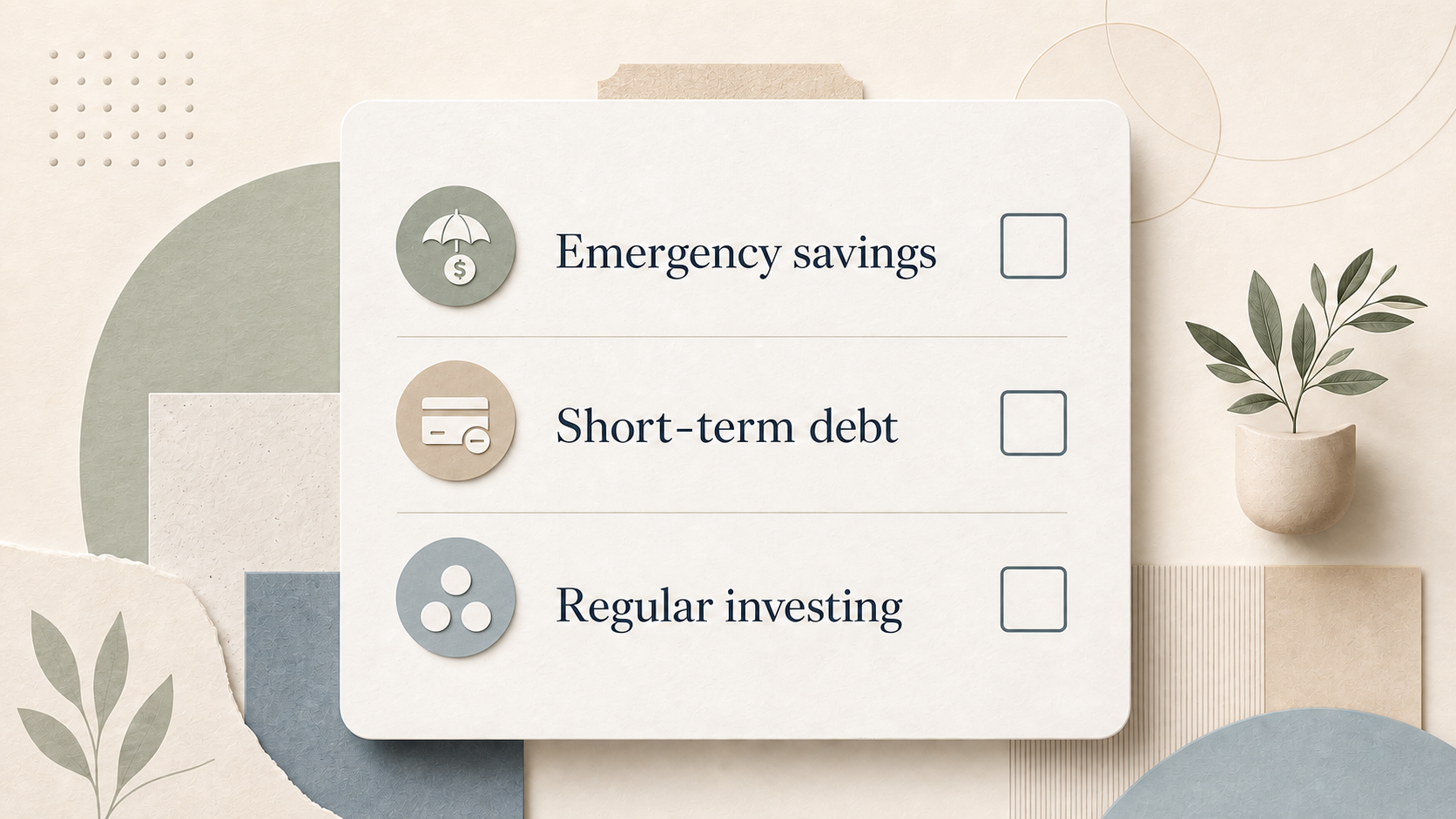 Before comparing portfolios, check whether money needed for everyday life is protected. The FCA says it is important not to begin investing until you can afford to, and highlights an emergency fund with instant access as a useful starting point. That fund can reduce the chance that an unexpected bill forces you to sell investments at an inconvenient time.
Short-term debt is another pause point. FCA InvestSmart guidance says to clear debts and not invest using a credit card; its guidance on whether to invest also says to prioritise debts such as credit-card debt and payday loans. Interest and charges can build quickly and may outweigh any investment return.
A simple readiness check is:
- Can you cover essential spending and keep accessible emergency cash?
- Are high-cost, short-term debts being repaid first?
- Can you invest regularly without relying on borrowing or money needed soon?
If the answer to any of these is no, address that before opening an investment account.
Match the platform to your goal and risk capacity
Write down what the money is for and when you may need it. A goal with a near-term spending date calls for a different conversation from money intended for a long-term objective. The FCA advises investors to be clear about their goals and realistic return expectations.
Do not begin with a desired return alone. FCA guidance stresses that greater potential returns come with higher levels of risk. Compare a managed service’s stated investment style and risk choices against the losses you could financially and emotionally withstand, not just the outcome you hope to achieve.
Capacity for loss matters separately from appetite for risk. Ask what would happen if the value fell while you still needed the money, or if a prolonged fall would make you abandon the plan. If the answer is unclear, pause rather than assuming a risk label solves the question.
Where managed investing can help
A managed service can be a practical fit when you prefer a provider to run the portfolio within a selected investment style instead of choosing and maintaining every holding yourself. The comparison is then about the scope and clarity of that service: how the provider describes its approach, what choices you make at the outset, and what information you receive afterwards.
Provider features vary. For example, J.P. Morgan Personal Investing says its customers can view charges in the app and receive regular investor updates, alongside access to financial guidance. Use examples like this as prompts for comparison, not as assumptions about every platform.
For each contender, note the investment style available, how often the service explains changes or performance, and whether the level of involvement feels right for you.
Understand the limits of managed investing
Management does not remove investment risk. The FCA makes clear that risk rises with the potential return being sought, and outcomes are not assured. A managed platform can organise investing, but it cannot guarantee a return, make losses impossible or decide what is suitable for your full personal circumstances.
It also helps to separate financial guidance from personalised advice. A provider may offer educational material, market updates or general guidance, but that is not automatically a recommendation tailored to your finances, tax position, objectives and needs. Check what the service actually provides before treating it as advice.
If you cannot assess the consequences of a loss, need a personal recommendation, or have complex circumstances, stop the self-directed comparison and consider whether regulated financial advice is appropriate.
Compare the full cost of investing
AI-generated generic editorial illustration — not a retailer product photo and does not depict the reviewed product or service. Help readers see that a headline management fee is not necessarily the complete cost of investing.
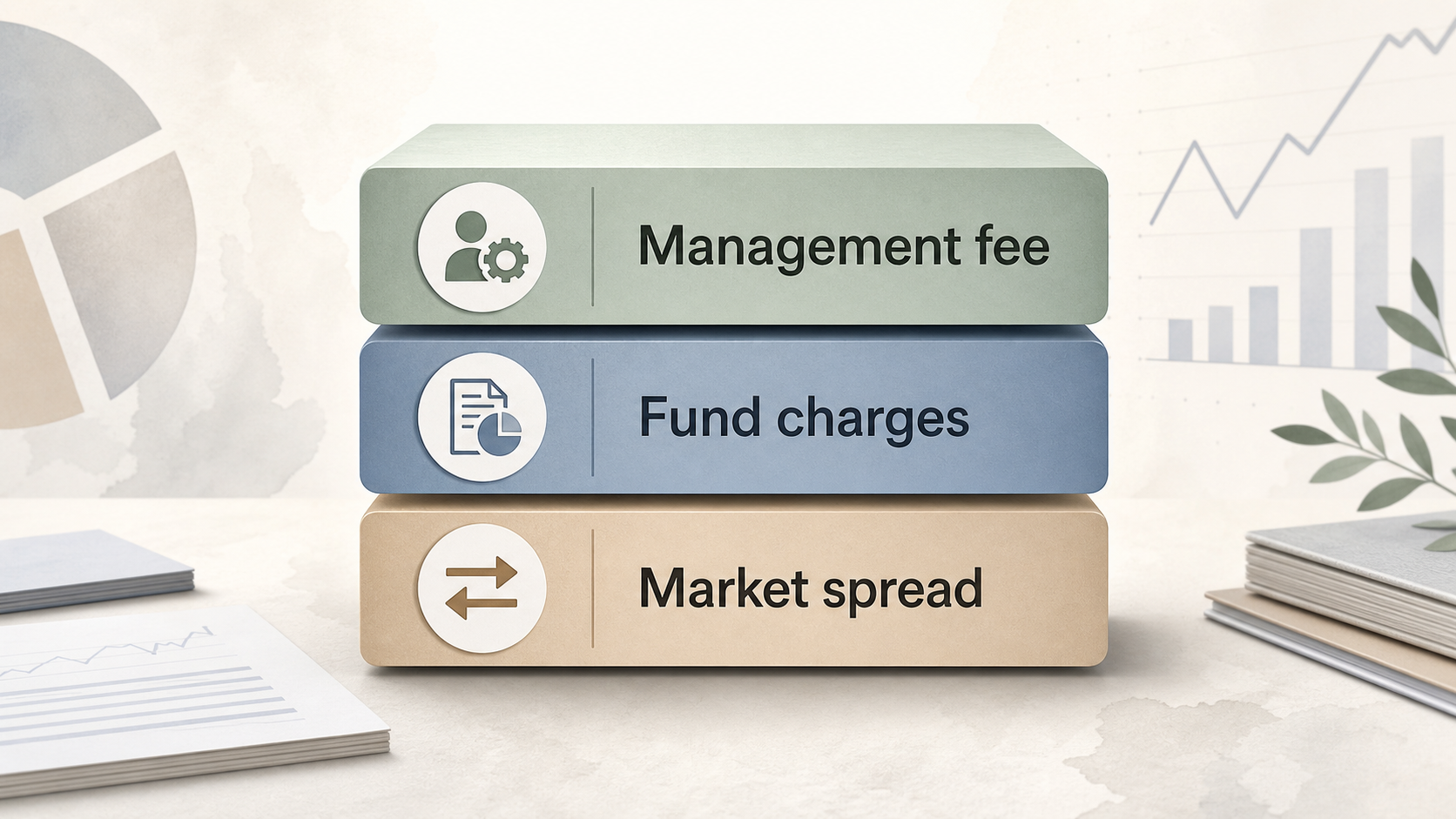 Compare charges on the same basis and use each provider’s current pricing page and account disclosures. Do not assume a headline management fee is the whole cost. One provider’s fee disclosure, for example, separates a management fee, investment-fund charges and market-spread costs, with some transaction costs reflected in portfolio performance.
Build a like-for-like table for every platform:
- Management fee: how it is calculated, charged and whether it changes with portfolio value or investment style.
- Fund and transaction charges: what is charged within the investments and how those charges are disclosed.
- Market-spread or dealing effects: whether they apply and how the provider describes them.
- Account-specific charges: any costs that apply to the wrapper or service you intend to use.
Do not fill gaps with assumptions. If a cost is unclear, ask the provider or leave that platform out of a fair comparison until you can document it. Review the current disclosures again immediately before opening the account.
Check account wrappers and access rules
A portfolio may look suitable but still be a poor operational fit if the account wrapper you need is unavailable or the rules do not work for your circumstances. Check the provider’s current list of account types before choosing a platform, then read the terms for the specific wrapper rather than relying on a general product page.
For each available wrapper, record who can open it, any eligibility conditions, how contributions and withdrawals work, and whether transfers are supported. Keep the investment decision separate from the wrapper decision: first identify the accounts that may be suitable for your circumstances, then compare only the platforms that offer them on acceptable terms.
Tax and legal consequences depend on personal circumstances. General platform information cannot determine which wrapper is right for you.
Check minimums, service limits and support
A comparison is not complete until you can use the service in the way you expect. Check the current terms for minimum opening amounts, regular-deposit rules, withdrawal process, transfer availability, supported account types and any relevant restrictions.
Also check how support is offered. A provider may make charge information available in an app or dashboard, as J.P. Morgan Personal Investing describes, but your needs may include a different channel or clearer help with a particular process. Record the support routes available, when they can be used and what the provider says they can help with.
Treat provider marketing as a starting point. Confirm practical limits in the pricing page, account terms and help materials that apply to the account you plan to open.
Build your managed-platform shortlist
Use the same sequence for every candidate:
- Confirm that your immediate finances are ready and that you are not borrowing to invest.
- State the goal, time horizon, desired level of involvement and capacity for loss.
- Check that the platform’s stated investment approach and risk options fit those inputs.
- Confirm the account wrapper, access rules, minimums, deposits, withdrawals, transfers and support.
- Create a full-cost comparison from current provider disclosures, including costs beyond any headline management charge.
- Save dated copies or notes of the relevant fee and terms pages, then recheck them before opening an account.
Remove a platform from the shortlist when a key point is undocumented, unsuitable or unclear. That is more defensible than selecting on a single advertised fee or a broad risk label. If you need someone to decide what is suitable for you personally, seek regulated financial advice rather than treating the shortlist as a recommendation.
Compare current platform deals →
Frequently Asked Questions
Should I invest if I still have credit-card debt?
Usually, this is a reason to pause. The FCA says to prioritise paying off short-term debt such as credit-card debt before investing, and says never to invest using a credit card. Review your immediate finances, repayments and emergency cash first.
Is a managed investment platform the same as financial advice?
No. A managed platform may manage a portfolio and offer information or guidance, but that does not automatically amount to personalised advice. Check the provider’s service description and seek regulated advice if you need a recommendation based on your individual circumstances.
How should I compare platform fees fairly?
Use the same headings for every provider and rely on current, documented disclosures. Compare the management fee alongside fund, transaction and market-spread costs where disclosed, plus any charges connected to the account you intend to use. Do not assume the headline fee represents every cost.
Can I choose an account wrapper after I have picked a platform?
You can assess the two decisions separately, but check wrapper availability and terms before finalising a platform. A platform only belongs on your shortlist if it offers the account type you need on terms that work for your circumstances.
Sources
Related reading
- Best digital investment platforms in the UK: an evidence-led comparison of fees, accounts and service models
- J.P. Morgan Personal Investing vs Moneyfarm: fees, portfolios, accounts and support compared
- Moneyfarm review: who the platform may suit and where its limits matter
- Managed vs DIY investment platforms: how control, cost and responsibility differ
Editorial information: About our editorial team · Read our editorial policy · Read our affiliate disclosure.